

Testing the performance of a newly installed submersible sand pump is crucial to ensure its efficient and reliable operation. As a submersible sand pump supplier, I understand the significance of thorough performance testing to meet the diverse needs of our customers. In this blog post, I will share some essential steps and methods for testing the performance of a newly installed submersible sand pump.
Pre - testing Preparations
Before initiating the performance test, it is essential to conduct a series of preparatory work. First, visually inspect the pump and its associated components. Check for any visible damage to the pump casing, impeller, motor, and cables. Ensure that all the connections are tight and secure, including the power cable connections and the pipe fittings.
Verify that the pump is correctly installed according to the manufacturer's instructions. The submersible sand pump should be properly submerged at the recommended depth in the sand - laden fluid. Incorrect submergence can lead to issues such as cavitation, which can significantly affect the pump's performance and lifespan.
Prepare the necessary testing equipment. This typically includes pressure gauges, flow meters, and power meters. The pressure gauges are used to measure the inlet and outlet pressures of the pump, which are key parameters for evaluating the pump's head. Flow meters are essential for determining the volumetric flow rate of the fluid being pumped. Power meters are used to measure the electrical power consumption of the pump motor, which is related to the pump's efficiency.
Testing the Flow Rate
One of the most important performance indicators of a submersible sand pump is its flow rate. There are several methods to measure the flow rate.
Using a Flow Meter
The most accurate way to measure the flow rate is by using a calibrated flow meter. There are different types of flow meters available, such as electromagnetic flow meters, ultrasonic flow meters, and turbine flow meters. Electromagnetic flow meters are suitable for conductive fluids and can provide accurate measurements even in the presence of sand particles. Ultrasonic flow meters are non - intrusive and can be installed on the outside of the pipeline, which is convenient for field testing. Turbine flow meters are relatively simple and cost - effective, but they may be affected by the sand particles in the fluid.
Install the flow meter in the pipeline according to its operating instructions. Make sure the flow meter is properly calibrated before use. Start the pump and let it run for a few minutes to reach a stable operating condition. Then, record the flow rate reading from the flow meter. Take multiple readings at regular intervals to ensure the accuracy of the measurement.
Volumetric Method
If a flow meter is not available, the volumetric method can be used as an alternative. This method involves collecting the pumped fluid in a container of known volume over a specific period of time. For example, use a large tank with a calibrated volume. Start the pump and direct the discharged fluid into the tank. Measure the time it takes to fill the tank to a certain level. Then, calculate the flow rate using the formula: Flow rate (Q) = Volume of fluid collected (V) / Time taken (t).
However, this method is less accurate than using a flow meter, especially when dealing with high - flow - rate pumps. Also, it requires careful handling to ensure that there is no leakage during the collection process.
Measuring the Pump Head
The pump head is another critical performance parameter, which represents the energy imparted by the pump to the fluid. It is the sum of the static head and the friction head.
Measuring Static Head
The static head is the vertical distance between the suction level and the discharge level of the fluid. Use a measuring tape or a level gauge to measure the height difference between the two levels. The suction level should be measured at the center of the pump inlet, and the discharge level should be measured at the point where the fluid is discharged from the pipeline.
Measuring Friction Head
The friction head is the energy loss due to the friction between the fluid and the pipeline walls. It can be calculated using empirical formulas based on the pipe diameter, length, roughness, and the flow rate. For a more accurate measurement, pressure gauges can be installed at the inlet and outlet of the pump. The difference in pressure readings between the two gauges is related to the total head of the pump. The friction head can be estimated by subtracting the static head from the total head measured by the pressure gauges.
It is important to note that the presence of sand particles in the fluid can increase the friction head compared to a clean fluid. Therefore, when calculating the friction head, the properties of the sand - laden fluid, such as the sand concentration and particle size, should be taken into account.
Evaluating the Pump Efficiency
The pump efficiency is a measure of how effectively the pump converts the electrical power input into hydraulic power output. It can be calculated using the following formula:
Efficiency (η) = (Hydraulic power output / Electrical power input) × 100%
The hydraulic power output (Ph) can be calculated using the formula: Ph = ρ × g × Q × H, where ρ is the density of the fluid, g is the acceleration due to gravity, Q is the flow rate, and H is the pump head.
The electrical power input can be measured directly using a power meter connected to the pump motor. Start the pump and let it operate at a stable condition. Then, record the electrical power consumption reading from the power meter.

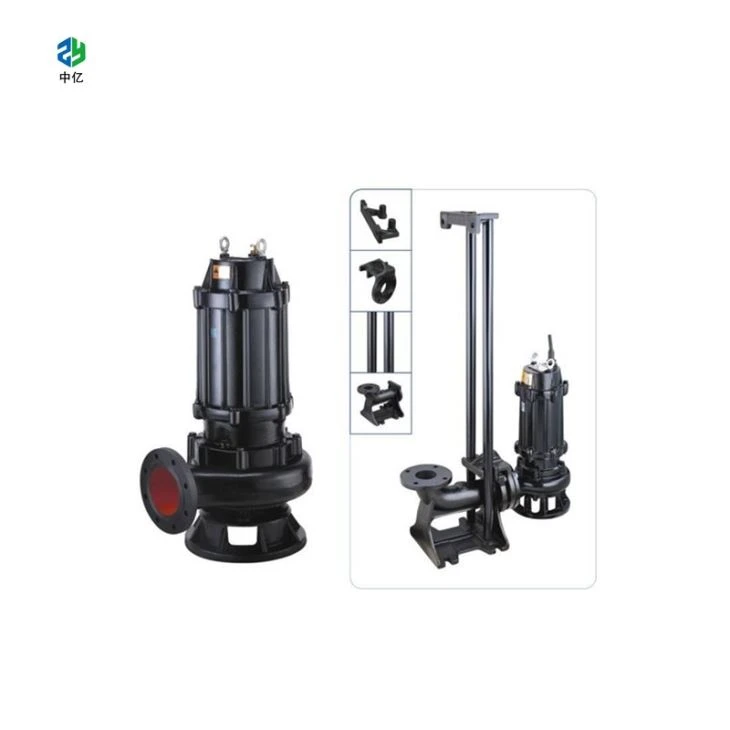
Calculate the pump efficiency using the above formulas. A high - efficiency pump indicates that it can achieve the desired flow rate and head with less electrical power consumption, which is beneficial for reducing operating costs.
Assessing the Pump's Ability to Handle Sand
Since the submersible sand pump is designed to handle sand - laden fluids, it is necessary to test its ability to handle sand.
Sand Concentration Test
Prepare a sand - water mixture with a known sand concentration. The sand concentration can be expressed as the mass ratio of sand to the total mass of the mixture. Start the pump and pump the sand - water mixture. Monitor the pump's performance, including the flow rate, head, and power consumption, during the pumping process. Compare the performance data with the data obtained when pumping clean water. A significant decrease in flow rate or an increase in power consumption may indicate that the pump is having difficulty handling the sand.
Particle Size Analysis
Analyze the particle size distribution of the sand in the fluid. Use a sieve analysis or a particle size analyzer to determine the range of particle sizes. Different submersible sand pumps have different capabilities in handling sand particles of various sizes. If the pump is unable to handle large - sized sand particles, it may lead to clogging or excessive wear of the pump components.
Noise and Vibration Testing
Excessive noise and vibration can indicate potential problems with the pump, such as misalignment, unbalanced impellers, or cavitation.
Noise Measurement
Use a sound level meter to measure the noise level generated by the pump during operation. Place the sound level meter at a fixed distance from the pump, usually about 1 meter away. Take multiple readings at different operating conditions to get an accurate assessment of the noise level. Compare the measured noise level with the manufacturer's specifications. If the noise level exceeds the acceptable range, it is necessary to check for possible causes and take corrective actions.
Vibration Measurement
Vibration sensors can be used to measure the vibration amplitude and frequency of the pump. Mount the vibration sensors on the pump casing at different locations. Start the pump and record the vibration data. Analyze the vibration spectrum to identify any abnormal vibration frequencies, which may be related to mechanical problems in the pump.
Conclusion
Thoroughly testing the performance of a newly installed submersible sand pump is essential to ensure its proper operation and to meet the customer's requirements. By following the steps and methods described above, we can accurately evaluate the flow rate, head, efficiency, sand - handling ability, noise, and vibration of the pump.
As a submersible sand pump supplier, we are committed to providing high - quality products and professional technical support. If you are interested in our submersible sand pumps or need more information about pump performance testing, please feel free to contact us for procurement discussions. We also offer a variety of related products such as Submersible Sewage Cutter Pump and Cast Iron Submersible Sewage Pump.
References
- Karassik, I. J., Messina, J. P., Cooper, P. T., & Heald, C. C. (2008). Pump Handbook. McGraw - Hill.
- ISO 9906:2012, Rotodynamic pumps - Hydraulic performance acceptance tests - Grades 1 and 2.
- American Petroleum Institute (API) Standard 610, Centrifugal Pumps for General Refinery Service.