

Hey there! As a submersible sand pump supplier, I've had my fair share of questions from customers about how different components affect the pump's performance. One question that comes up a lot is, "What is the effect of the number of impellers on the performance of a submersible sand pump?" Well, let's dive right into it!
First off, let's talk about what an impeller is. Simply put, an impeller is a rotating component within the pump that transfers energy to the fluid (in our case, sand - laden water). It's like the heart of the pump, pushing the sand - water mixture through the system.
1. Head and Pressure
The head of a pump refers to the height to which the pump can lift the fluid. When it comes to submersible sand pumps, the number of impellers has a significant impact on the head. A single - impeller pump has a certain maximum head it can achieve. This is because the impeller has to do all the work of increasing the fluid's pressure to lift it against gravity and move it through the pipes.

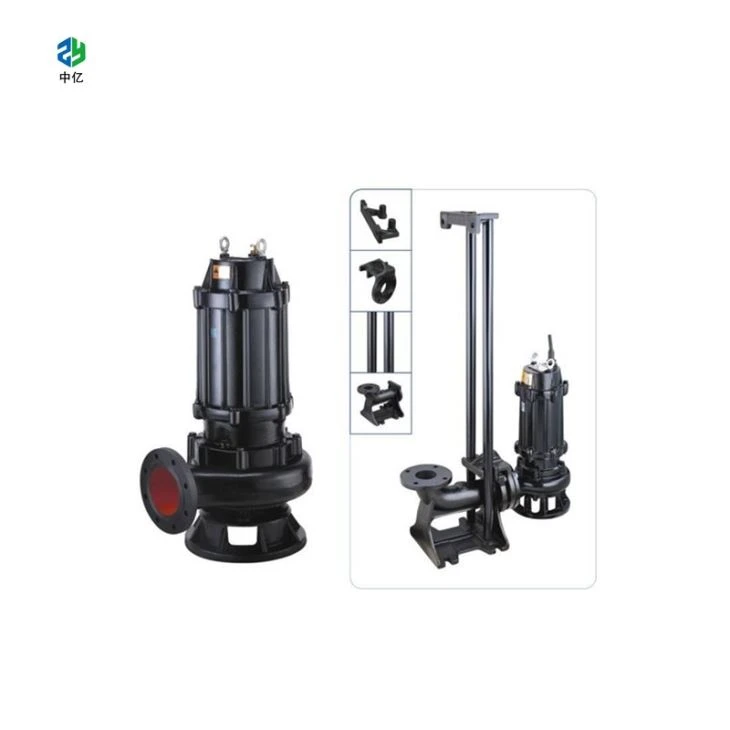
When you add more impellers in series, each impeller adds its own pressure boost to the fluid. So, if one impeller can generate a certain amount of pressure, two impellers can generate roughly twice that pressure (assuming they're identical and working efficiently). This means that a multi - impeller submersible sand pump can achieve a much higher head compared to a single - impeller pump.
Imagine you're trying to pump sand - water mixture from a deep well to a storage tank on a high platform. With a single - impeller pump, you might not be able to reach the required height. But if you switch to a multi - impeller pump, the additional impellers can provide the extra pressure needed to get the job done.
2. Flow Rate
Now, let's talk about flow rate. The flow rate is the volume of fluid that the pump can move in a given time. The relationship between the number of impellers and flow rate is a bit more complex.
In general, adding more impellers doesn't directly increase the flow rate. The flow rate is mainly determined by the pump's design, the size of the impeller, and the power of the motor. However, a multi - impeller pump can sometimes handle a higher flow rate indirectly.
A higher - head pump (which is often a multi - impeller pump) can overcome greater resistance in the pipeline. If you have a long or narrow pipeline, a single - impeller pump might struggle to maintain a good flow rate against the frictional resistance. But a multi - impeller pump, with its higher pressure capabilities, can push the fluid through the pipe more effectively, thus potentially allowing for a higher flow rate under certain conditions.
However, it's important to note that if the motor of the pump isn't powerful enough, adding more impellers might not increase the flow rate at all. The motor needs to be able to provide enough power to turn all the impellers at the required speed.
3. Efficiency
Efficiency is a crucial factor when it comes to pump performance. A pump's efficiency is the ratio of the useful power output (the power used to move the fluid) to the power input (the electrical power consumed by the motor).
In a single - impeller pump, there are fewer components in the pumping system. This generally means less energy loss due to friction between the impeller and the fluid, and between the different parts of the pump. So, single - impeller pumps can be quite efficient for applications where a relatively low head is required.
On the other hand, multi - impeller pumps have more complex internal structures. The additional impellers and the associated components can lead to more energy losses. However, in applications where a high head is needed, a multi - impeller pump can be more efficient overall. This is because a single - impeller pump would need to be much larger and more powerful to achieve the same head, which would consume more energy.
4. Wear and Tear
The number of impellers also affects the wear and tear of the pump. In a submersible sand pump, the impellers are constantly in contact with the abrasive sand particles in the fluid. This can cause significant wear over time.
In a single - impeller pump, all the abrasive action is concentrated on one impeller. This means that the single impeller can wear out relatively quickly, especially in high - sand - content applications.
In a multi - impeller pump, the wear is distributed among multiple impellers. This can extend the overall lifespan of the pump, as the individual impellers may not wear out as quickly. However, if one impeller in a multi - impeller pump starts to wear unevenly, it can affect the performance of the entire pump. So, regular inspection and maintenance are even more important for multi - impeller pumps.
5. Cost
Cost is always a consideration in any purchasing decision. Single - impeller submersible sand pumps are generally less expensive to manufacture and purchase. They have a simpler design, fewer components, and require less material.
Multi - impeller pumps, on the other hand, are more expensive. The additional impellers, along with the need for a more powerful motor and a more complex casing design, drive up the cost. However, in applications where a high head is required, the investment in a multi - impeller pump can pay off in the long run due to its better performance and potentially longer lifespan.
Applications for Different Impeller Configurations
Single - impeller submersible sand pumps are great for applications where a low to medium head is required. For example, if you're pumping sand - water from a shallow pit to a nearby storage area, a single - impeller pump can get the job done efficiently and at a low cost.
Multi - impeller pumps are ideal for deep - well pumping, long - distance pipeline transportation, and any application where a high head is needed. They can also be used in situations where a large volume of sand - water needs to be moved quickly, as long as the motor can handle the load.
If you're looking for other types of pumps, we also offer Submersible Sewage Cutter Pump and Cast Iron Submersible Sewage Pump, which are suitable for different sewage - handling applications.
So, as you can see, the number of impellers has a significant impact on the performance, efficiency, wear, and cost of a submersible sand pump. When choosing a pump, it's important to consider your specific application requirements, including the required head, flow rate, and the properties of the fluid you'll be pumping.
If you're in the market for a submersible sand pump or have any questions about our products, don't hesitate to reach out. We're here to help you make the right choice for your needs. Contact us today to start a discussion about your procurement requirements!
References
- Pump Handbook, 4th Edition, by Igor Karassik, Joseph Messina, Paul Cooper, and Charles Heald.
- Fluid Mechanics and Hydraulic Machines, by R. K. Bansal.