

Hey there! As a supplier of centrifugal pumps, I often get asked about the priming process of these pumps. It's a crucial topic, so I thought I'd share some insights with you.
First off, let's understand what a centrifugal pump is. A centrifugal pump is a type of pump that uses centrifugal force to move fluid through the system. It consists of an impeller, which rotates at high speed, and a casing that directs the flow of the fluid. These pumps are widely used in various industries, from water supply and wastewater treatment to oil and gas and manufacturing.
Now, what is the priming process? Priming a centrifugal pump is the process of filling the pump casing and the suction line with the fluid that the pump is intended to pump. This is essential because centrifugal pumps are not self - priming in most cases. If the pump is not properly primed, it won't be able to create the necessary suction to draw the fluid into the pump and then discharge it.
There are a few reasons why priming is so important. When the pump is filled with fluid, it helps to create a continuous flow path. Without proper priming, air pockets can form in the pump and the suction line. Air is compressible, unlike liquids. So, when the impeller rotates, it can't build up enough pressure to move the air and draw in more fluid. This can lead to the pump running dry, which can cause overheating, damage to the impeller and other components, and ultimately, pump failure.
Let's look at the steps involved in the priming process.
Step 1: Check the Pump and System
Before you start priming, you need to make sure that the pump and the entire system are in good working condition. Check for any leaks in the suction line, the pump casing, and the discharge line. A leak can allow air to enter the system, making it difficult to prime the pump. Also, ensure that all valves in the system are in the correct position. The suction valve should be fully open, and the discharge valve can be partially closed during the priming process.
Step 2: Fill the Pump Casing
The next step is to fill the pump casing with the fluid. There are a few ways to do this. One common method is to use a priming tank. A priming tank is a small reservoir that is connected to the pump suction. You can fill the priming tank with the fluid, and then open a valve to allow the fluid to flow into the pump casing. Another method is to use a vacuum pump. A vacuum pump can be used to create a vacuum in the pump casing and the suction line. This vacuum will draw the fluid from a source, such as a storage tank, into the pump.
Step 3: Remove Air from the System
Once the pump casing is filled with fluid, you need to remove any remaining air from the system. You can do this by opening a vent valve on the pump casing. As the fluid fills the casing, the air will be forced out through the vent valve. Keep the vent valve open until you see a continuous flow of fluid coming out, indicating that all the air has been removed.
Step 4: Start the Pump
After all the air has been removed and the pump casing is full of fluid, you can start the pump. As the impeller starts to rotate, it will create a centrifugal force that will move the fluid through the pump and into the discharge line. Gradually open the discharge valve to the desired flow rate.
Now, let's talk about some common issues that can occur during the priming process. One common problem is a clogged suction line. If the suction line is clogged with debris, it can prevent the fluid from flowing into the pump. You can check for clogs by inspecting the suction strainer, which is usually located at the end of the suction line. Clean or replace the strainer if necessary.
Another issue is a faulty check valve. A check valve is a valve that allows fluid to flow in one direction only. If the check valve is not working properly, it can allow air to enter the pump casing, causing problems with priming. You may need to replace the check valve if it is faulty.
As a centrifugal pump supplier, we offer a wide range of centrifugal pumps for different applications. For example, if you're looking for a pump for fire protection, you might be interested in our Turbine Fire Pump. These pumps are designed to provide high - pressure water flow for firefighting purposes.
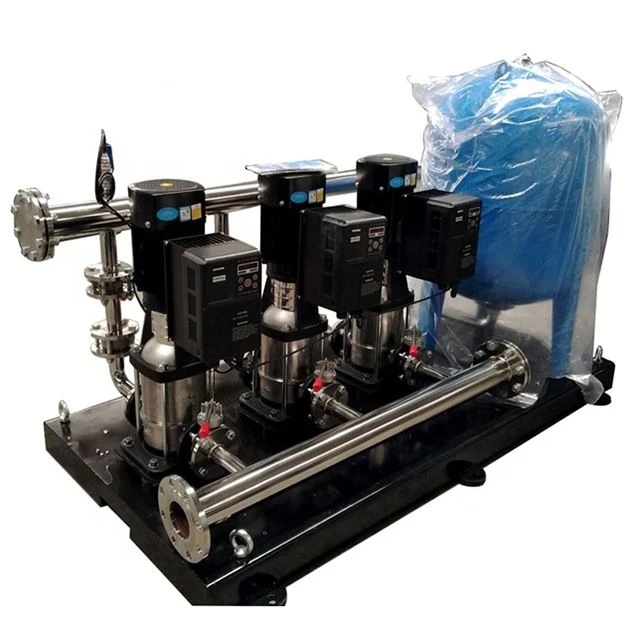
If you need a pump for a constant water supply system, our Constant Pressure Water Supply Equipment is a great option. It can maintain a constant pressure in the water supply network, ensuring a stable flow of water.
And for applications where you need a pump that can be powered by air, we have Air Powered Centrifugal Pump. These pumps are ideal for use in hazardous environments where electricity may not be safe.
In conclusion, the priming process of a centrifugal pump is a critical step in ensuring its proper operation. By following the steps I've outlined above and being aware of common issues, you can prime your centrifugal pump effectively and avoid costly downtime. If you have any questions about centrifugal pumps or the priming process, or if you're interested in purchasing a pump, feel free to reach out. We're here to help you find the right solution for your needs.

References
- Pump Handbook, by Igor Karassik et al.
- Centrifugal Pumps: Design and Application, by Heinz P. Bloch and Allan R. Budris.