

Can a Multistage Centrifugal Pump Handle Viscous Fluids?
In the realm of fluid handling, the question of whether a multistage centrifugal pump can handle viscous fluids is a crucial one. As a leading supplier of multistage centrifugal pumps, we understand the importance of addressing this query to help our customers make informed decisions.
Multistage centrifugal pumps are widely used in various industries due to their ability to generate high pressures and flow rates. They consist of multiple impellers stacked in series, which allows for the step - by - step increase in fluid pressure. However, the performance of these pumps can be significantly affected when dealing with viscous fluids.
Viscosity is a measure of a fluid's resistance to flow. Fluids with high viscosity, such as oils, syrups, and some chemical solutions, flow more slowly and require more energy to move compared to low - viscosity fluids like water. When a multistage centrifugal pump is used to handle viscous fluids, several challenges arise.
One of the primary issues is the reduction in pump efficiency. As the viscosity of the fluid increases, the frictional losses within the pump also increase. The impellers have to work harder to move the thick fluid, which leads to a decrease in the pump's overall efficiency. This means that more power is required to achieve the same flow rate and pressure as when pumping a low - viscosity fluid.
Another challenge is the potential for cavitation. Cavitation occurs when the pressure of the fluid drops below its vapor pressure, causing the formation of vapor bubbles. These bubbles can collapse within the pump, leading to damage to the impellers and other components. Viscous fluids are more prone to cavitation because they have a higher resistance to flow, which can cause pressure drops within the pump.
The head - capacity curve of a multistage centrifugal pump also changes when handling viscous fluids. The head (pressure) generated by the pump decreases, and the flow rate is reduced compared to pumping water. This means that the pump may not be able to deliver the same performance as it would with a low - viscosity fluid.
However, it is not impossible for a multistage centrifugal pump to handle viscous fluids. With proper design and selection, these pumps can be used effectively in applications involving viscous fluids.
One approach is to select a pump with a larger impeller diameter. A larger impeller can generate more torque, which is necessary to move the viscous fluid. Additionally, the pump can be designed with a lower speed to reduce the frictional losses and the risk of cavitation.
Another option is to use a pump with a special impeller design. Some impellers are designed specifically for handling viscous fluids, with features such as wider passages and smoother surfaces to reduce the resistance to flow.
At our company, we offer a range of multistage centrifugal pumps that are suitable for handling viscous fluids. Our Vertical Multistage Centrifugal Pump is designed with advanced technology to ensure efficient operation even with high - viscosity fluids. The vertical design allows for a compact installation, making it ideal for applications where space is limited.
Our Booster Pump Set is another option for handling viscous fluids. This set is designed to increase the pressure of the fluid, which is particularly useful when dealing with thick fluids that require more energy to move.
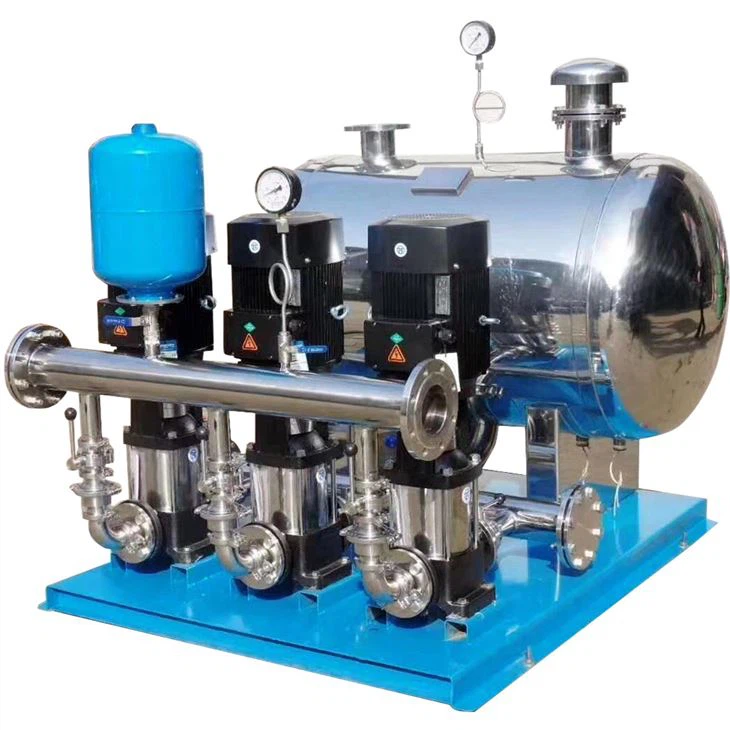

The Horizontal Centrifugal Multistage Pump is also available in our product line. It offers a stable and reliable performance, and can be customized to meet the specific requirements of handling viscous fluids.
When considering using a multistage centrifugal pump for viscous fluids, it is important to conduct a detailed analysis of the fluid properties, such as viscosity, density, and temperature. This information will help in selecting the right pump and ensuring its optimal performance.
In addition to the pump selection, proper maintenance is also crucial when handling viscous fluids. Regular cleaning of the pump components, such as the impellers and volutes, can prevent the build - up of viscous deposits, which can affect the pump's performance.
In conclusion, while multistage centrifugal pumps face challenges when handling viscous fluids, with the right design, selection, and maintenance, they can be effectively used in applications involving these fluids. Our company is committed to providing high - quality multistage centrifugal pumps that can meet the diverse needs of our customers, including those dealing with viscous fluids.
If you are interested in purchasing multistage centrifugal pumps for handling viscous fluids or have any questions about our products, we encourage you to contact us for a detailed discussion. Our team of experts will be happy to assist you in finding the most suitable pump for your application.
References
- Pump Handbook, Karassik et al.
- Fluid Mechanics and Hydraulic Machines, R. K. Bansal