

Hey there! As a supplier of centrifugal pumps, I often get asked about the performance curve of a centrifugal pump. So, I thought I'd take a few minutes to break it down for you.
First off, what exactly is a performance curve? Well, it's basically a graph that shows how a centrifugal pump performs under different conditions. It plots the pump's flow rate (usually in gallons per minute or cubic meters per hour) on the x - axis and the pump's head (which is like the pressure the pump can generate, measured in feet or meters) on the y - axis.
Let's start with the basic shape of the curve. Generally, a centrifugal pump performance curve has a downward - sloping shape. At low flow rates, the pump can generate a relatively high head. As the flow rate increases, the head that the pump can produce decreases. Why is that? It all comes down to the way a centrifugal pump works.
A centrifugal pump uses an impeller that rotates at high speed. When the fluid enters the pump, the impeller imparts kinetic energy to it. The kinetic energy is then converted into pressure energy as the fluid moves through the pump casing. At low flow rates, there's less fluid to deal with, so the impeller can transfer more energy to each unit of fluid, resulting in a higher head. But as the flow rate goes up, there's more fluid to move, and the impeller has to spread the energy over a larger volume of fluid. So, the head decreases.
Now, there are a few other important things to note on the performance curve. One is the best efficiency point (BEP). This is the point on the curve where the pump operates most efficiently. At the BEP, the pump uses the least amount of power to move a given amount of fluid. Running a pump at or near its BEP is crucial because it saves energy and reduces wear and tear on the pump. If you run a pump far from its BEP, it can lead to problems like cavitation, vibration, and premature failure.
Another thing to look at is the shut - off head. This is the maximum head that the pump can generate when the flow rate is zero. It's kind of like the pump's "maximum pressure" capability. You can think of it as what would happen if you blocked the outlet of the pump completely. The pump would keep trying to push the fluid, and the pressure would build up until it reaches the shut - off head.
There are also some other curves that are often shown along with the main performance curve. For example, there's the power curve. This shows how much power the pump consumes at different flow rates. Usually, the power consumption increases as the flow rate increases, but it doesn't always increase linearly. And then there's the efficiency curve, which shows the pump's efficiency at different flow rates. As I mentioned earlier, the peak of the efficiency curve is at the BEP.
Now, let's talk about how these performance curves can vary depending on the type of centrifugal pump. We offer a range of centrifugal pumps, like the Multistage Centrifugal Pump. A multistage centrifugal pump has multiple impellers in series. This allows it to generate a much higher head compared to a single - stage pump. The performance curve of a multistage pump will show a steeper increase in head for a given increase in flow rate compared to a single - stage pump. And because it can handle higher heads, it's often used in applications where high - pressure delivery is required, like in tall buildings for water supply or in industrial processes.
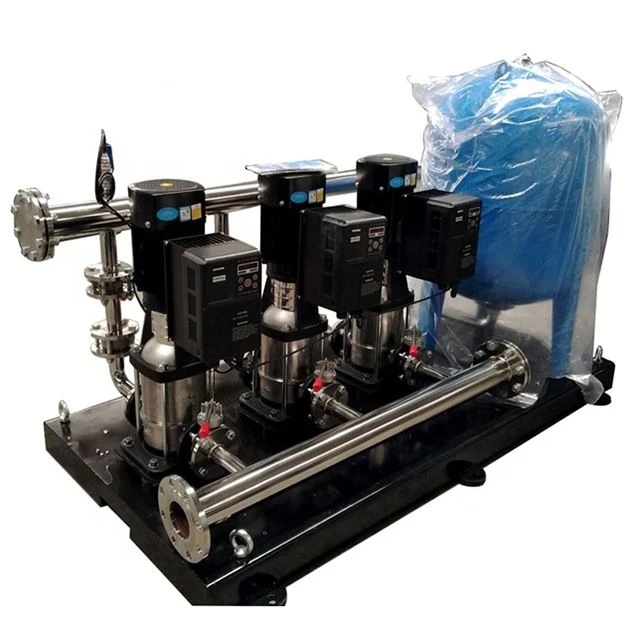
We also have Constant Pressure Water Supply Equipment. This equipment is designed to maintain a constant pressure in the water supply system. The performance curve of the pumps used in this equipment is carefully selected and adjusted to ensure that the pressure remains stable even as the flow rate changes. It might have a flatter performance curve in the operating range to achieve this constant pressure.

Then there's the Turbine Fire Pump. Fire pumps need to be able to deliver a large amount of water at a high pressure quickly. The performance curve of a turbine fire pump is optimized for this purpose. It has a high shut - off head and can maintain a relatively high head even at high flow rates. This ensures that it can supply water to the fire - fighting system effectively.
So, why is understanding the performance curve so important? Well, if you're in the market for a centrifugal pump, it helps you choose the right pump for your application. You need to know what flow rate and head you require. By looking at the performance curve, you can see if a particular pump can meet your needs. You can also estimate how much power it will consume and how efficiently it will operate.
If you're already using a centrifugal pump, the performance curve can help you troubleshoot problems. For example, if you notice that the pump is not delivering the expected flow rate or head, you can compare the actual performance with the performance curve. If there's a big difference, it could indicate a problem like a clogged impeller, a worn - out seal, or a misaligned motor.
In conclusion, the performance curve of a centrifugal pump is a vital tool for anyone involved with these pumps. Whether you're a buyer, an operator, or a maintenance person, it gives you valuable information about how the pump will perform. And as a centrifugal pump supplier, we're always here to help you understand these curves and choose the right pump for your specific needs.
If you're interested in purchasing a centrifugal pump or have any questions about the performance curves, feel free to reach out to us. We'd be more than happy to have a chat and discuss your requirements in detail. Let's work together to find the perfect pump solution for you!
References
- Pump Handbook, Karassik et al.
- Centrifugal Pumps: Design and Application, Stepanoff