

As a supplier of single centrifugal pumps, I've witnessed firsthand the wide range of factors that can influence the cost of these essential pieces of equipment. Understanding these factors is crucial for both suppliers and customers, as it allows for more informed decision - making during the procurement process. In this blog, I'll delve into the key elements that impact the cost of a single centrifugal pump.
Pump Design and Configuration
The design and configuration of a single centrifugal pump play a significant role in determining its cost. Pumps come in various types, each tailored to specific applications. For instance, a Piping Centrifugal Pump is designed for fluid transfer in piping systems. These pumps are often more compact and may have a simpler design, which can make them relatively more affordable compared to pumps with more complex configurations.
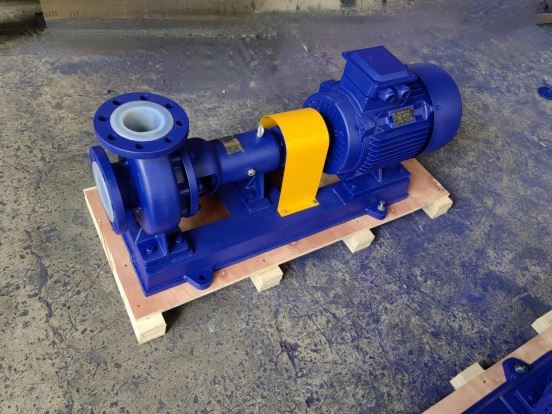
On the other hand, IHF Chemicals Centrifugal Pump is engineered to handle corrosive and hazardous chemicals. They require special materials and precise manufacturing processes to ensure safety and durability. The need for high - quality, corrosion - resistant materials such as special alloys or high - grade plastics, along with strict quality control during production, drives up the cost of these pumps.
The Horizontal Single Suction Centrifugal Pump is another common type. Its horizontal design and single - suction feature make it suitable for many general - purpose applications. However, if it is designed with advanced features like high - efficiency impellers or variable - speed drives, the cost will increase due to the additional engineering and components involved.
Materials of Construction
The materials used to build a single centrifugal pump are a major cost determinant. Pumps can be made from a variety of materials, including cast iron, stainless steel, bronze, and exotic alloys. Cast iron is a common and relatively inexpensive material. It is suitable for applications where the pumped fluid is not highly corrosive, such as water transfer in non - aggressive environments.
Stainless steel, on the other hand, offers better corrosion resistance. It is often used in applications where the fluid contains mild acids or salts. The cost of stainless - steel pumps is higher than cast - iron pumps because stainless steel is more expensive to produce and machine.
For extremely corrosive or high - temperature applications, exotic alloys like titanium or Hastelloy may be required. These materials are very costly due to their limited availability and the complex extraction and processing methods. Pumps made from these alloys are used in industries such as chemical processing, petrochemicals, and pharmaceuticals, where the risk of corrosion and chemical attack is high.
Performance Requirements
The performance requirements of a single centrifugal pump have a direct impact on its cost. Flow rate and head are two key performance parameters. A pump that needs to deliver a high flow rate or a high head will generally be more expensive.
To achieve a high flow rate, the pump may need a larger impeller and a more powerful motor. The larger impeller requires more material and more precise manufacturing to ensure balanced rotation. A more powerful motor also adds to the cost, as it needs to be more robust and may require additional cooling and control systems.
Similarly, pumps designed for high - head applications need to generate a large amount of pressure. This often involves using multi - stage impellers or more advanced hydraulic designs. Multi - stage pumps have multiple impellers stacked in series, which increases the complexity of the pump and the manufacturing cost.
Efficiency
Energy efficiency is becoming an increasingly important factor in the cost of single centrifugal pumps. An energy - efficient pump may have a higher upfront cost but can result in significant savings over its lifetime. High - efficiency pumps are designed with advanced impeller geometries and hydraulic systems that minimize energy losses.
These pumps require more research and development to optimize their designs. The use of advanced computational fluid dynamics (CFD) simulations and precision manufacturing techniques to achieve the desired efficiency levels adds to the production cost. However, in the long run, the reduced energy consumption can offset the initial investment, making them a cost - effective choice for many customers.
Manufacturing and Quality Control
The manufacturing process and quality control measures also affect the cost of a single centrifugal pump. Pumps that are mass - produced using automated manufacturing processes can often be produced at a lower cost per unit. Automated processes reduce labor costs and increase production speed.
However, for pumps with high - precision requirements or custom - made designs, manual manufacturing processes may be necessary. Manual labor is more expensive, and the production time is longer. Additionally, pumps used in critical applications, such as in the power generation or aerospace industries, require strict quality control. This includes non - destructive testing, performance testing, and compliance with international standards.
Quality control measures ensure that the pump meets the required specifications and reliability standards. The cost of these tests and inspections, along with the associated documentation, adds to the overall cost of the pump.

Market Conditions
Market conditions, such as supply and demand, also play a role in determining the cost of single centrifugal pumps. In a market with high demand and limited supply, the prices of pumps tend to increase. This can happen when there is a sudden surge in infrastructure projects or a shortage of raw materials.
Competition among suppliers can also affect the price. In a highly competitive market, suppliers may offer lower prices to attract customers. However, in some cases, a supplier may charge a premium for a well - known brand or a pump with a proven track record of reliability.
Additional Features and Accessories
Single centrifugal pumps can be equipped with various additional features and accessories, which can increase the cost. For example, a pump with a built - in variable - frequency drive (VFD) allows for precise control of the pump speed. This feature is useful for applications where the flow rate needs to be adjusted according to the demand. However, a VFD adds to the cost of the pump due to its electronic components and the additional control software.
Other accessories such as mechanical seals, couplings, and monitoring systems also contribute to the overall cost. High - quality mechanical seals are essential for preventing leakage, especially in pumps handling hazardous or valuable fluids. The cost of these seals can vary depending on the material and design.
In conclusion, the cost of a single centrifugal pump is influenced by a multitude of factors, including design and configuration, materials of construction, performance requirements, efficiency, manufacturing and quality control, market conditions, and additional features. As a supplier, I understand the importance of providing customers with pumps that meet their specific needs at a reasonable cost.
If you are in the market for a single centrifugal pump and want to discuss your requirements in detail, I encourage you to reach out to me. We can work together to find the most suitable pump for your application, taking into account all the relevant factors and ensuring the best value for your investment.
References
- Pump Handbook, Karassik et al.
- Chemical Engineering Handbook, Perry and Green.
- Standards for Centrifugal Pumps, ANSI/API.