

As a reputable supplier of double suction pumps, understanding the essential instruments for measuring the performance parameters of these pumps is crucial. Double suction pumps are widely used in various industrial applications due to their high efficiency, large flow rate, and stable operation. In this blog post, I will discuss the key instruments needed to accurately measure the performance parameters of a double suction pump, providing valuable insights for both operators and potential buyers.
Flow Meter
A flow meter is an indispensable instrument for measuring the volume or mass of fluid flowing through the double suction pump. It provides real - time data on the flow rate, which is one of the most critical performance parameters. There are several types of flow meters available, each with its own advantages and suitable applications.
- Electromagnetic Flow Meter: This type of flow meter operates based on Faraday's law of electromagnetic induction. It is ideal for measuring the flow rate of conductive fluids, such as water with dissolved salts. Electromagnetic flow meters offer high accuracy, wide measurement range, and no moving parts, which reduces maintenance requirements. For example, in water supply systems where the double suction pump is used to transport treated water, an electromagnetic flow meter can provide precise flow rate measurements.
- Ultrasonic Flow Meter: Ultrasonic flow meters use ultrasonic waves to measure the flow rate of fluids. They can be classified into transit - time and Doppler ultrasonic flow meters. Transit - time ultrasonic flow meters are suitable for clean fluids, while Doppler flow meters are more appropriate for fluids with suspended particles or bubbles. Ultrasonic flow meters are non - intrusive, which means they can be installed on the outside of the pipeline without interrupting the flow, making them a convenient choice for many applications.
Pressure Gauge
Pressure gauges are used to measure the pressure at different points in the double suction pump system. There are two main types of pressure measurements: suction pressure and discharge pressure.
- Suction Pressure Gauge: Installed at the suction inlet of the pump, the suction pressure gauge measures the pressure of the fluid entering the pump. Monitoring the suction pressure is essential to ensure that the pump is operating within its designed range. If the suction pressure is too low, it may cause cavitation, which can damage the pump impeller and reduce its efficiency.
- Discharge Pressure Gauge: Located at the discharge outlet of the pump, the discharge pressure gauge measures the pressure of the fluid leaving the pump. The discharge pressure is directly related to the pump's head, which is the energy added to the fluid by the pump. By comparing the discharge pressure with the suction pressure, the total head of the pump can be calculated.
Tachometer
A tachometer is used to measure the rotational speed of the pump shaft. The rotational speed of the pump is a critical factor that affects its performance. The flow rate, head, and power consumption of the pump are all related to the rotational speed. In general, the flow rate and head increase with the increase of the rotational speed, while the power consumption increases exponentially. Therefore, it is necessary to maintain the pump at the designed rotational speed to ensure optimal performance. There are different types of tachometers, such as contact and non - contact tachometers. Non - contact tachometers, such as laser tachometers, are more commonly used as they can measure the speed without physical contact with the rotating shaft, reducing the risk of damage.
Power Meter
A power meter is used to measure the electrical power consumed by the pump motor. Measuring the power consumption is important for evaluating the pump's efficiency. The efficiency of a double suction pump is defined as the ratio of the hydraulic power output to the electrical power input. By measuring the power consumption and the hydraulic power output (calculated from the flow rate and head), the efficiency of the pump can be determined. If the efficiency is lower than the designed value, it may indicate problems such as mechanical losses, hydraulic losses, or motor inefficiencies. There are various types of power meters available, including digital power meters, which can provide accurate and real - time power measurements.
Temperature Sensor
Temperature sensors are used to monitor the temperature of the pump and the fluid. High temperatures can affect the performance and lifespan of the pump. For example, if the temperature of the motor exceeds its rated temperature, it may cause insulation damage and reduce the motor's efficiency. In addition, high fluid temperatures can also increase the risk of cavitation. Temperature sensors can be installed at different locations, such as the motor housing, the pump bearing, and the fluid inlet and outlet. By continuously monitoring the temperature, any abnormal temperature rise can be detected early, allowing for timely maintenance and preventing potential failures.
Vibration Sensor
Vibration sensors are used to detect the vibration levels of the pump. Excessive vibration can indicate problems such as misalignment, unbalance, or bearing wear. Monitoring the vibration levels of the double suction pump is crucial for ensuring its reliable operation. Vibration sensors can be installed on the pump casing or the motor to measure the vibration amplitude and frequency. By analyzing the vibration data, the root cause of the vibration can be identified, and appropriate corrective actions can be taken.
Torque Meter
A torque meter is used to measure the torque applied to the pump shaft. Torque is related to the power and rotational speed of the pump. By measuring the torque and the rotational speed, the power output of the pump can be calculated. Torque meters are especially useful in applications where the pump is driven by a variable - speed motor. In such cases, the torque meter can help to optimize the pump's performance by adjusting the motor speed and torque according to the actual operating conditions.
In addition to these basic instruments, other auxiliary instruments may also be used depending on the specific requirements of the application. For example, in some industrial processes where the fluid properties need to be monitored, instruments such as pH meters, conductivity meters, and viscosity meters may be used.
When selecting these instruments, it is important to choose high - quality products that are accurate, reliable, and suitable for the specific application. As a double suction pump supplier, we can provide professional advice on instrument selection and installation to ensure that our customers can accurately measure the performance parameters of the double suction pump and optimize its operation.
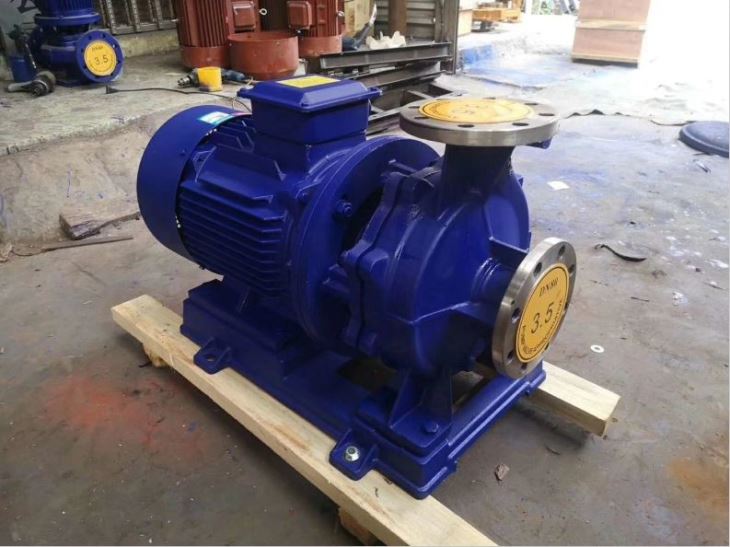
If you are interested in our double suction pumps or need more information about the measurement of pump performance parameters, we also offer other types of pumps such as the Single horizontal centrifugal pump, IHF Chemicals Centrifugal Pump, and Piping Centrifugal Pump. Please feel free to contact us for further discussion and procurement negotiation. We are committed to providing you with the best products and services.

References
- Karassik, I. J., Messina, J. P., Cooper, P. T., & Heald, C. C. (2008). Pump Handbook. McGraw - Hill Professional.
- Stepanoff, A. J. (1957). Centrifugal and Axial Flow Pumps: Theory, Design, and Application. Wiley.