

Corrosion is one of the most significant challenges that can affect the performance and lifespan of multistage fire pumps. As a multistage fire pump supplier, I understand the importance of protecting these critical pieces of equipment from the damaging effects of corrosion. In this blog post, I'll share some practical strategies to safeguard multistage fire pumps against corrosion, ensuring their reliability and longevity in fire protection systems.
Understanding Corrosion in Multistage Fire Pumps
Before delving into protective measures, it's essential to understand how corrosion occurs in multistage fire pumps. Corrosion is a natural process that involves the degradation of metals due to chemical reactions with their environment. In the context of fire pumps, several factors can contribute to corrosion:
- Water Quality: The quality of the water used in the fire protection system plays a crucial role. Water with high levels of dissolved salts, minerals, or oxygen can accelerate the corrosion process. For example, hard water, which contains high concentrations of calcium and magnesium ions, can form scale deposits on pump surfaces. These deposits can trap moisture and create localized corrosion sites.
- Environmental Conditions: Fire pumps are often installed in various environments, some of which can be harsh. Outdoor installations are exposed to rain, humidity, and pollutants, while indoor installations in industrial settings may be subject to chemicals and vapors. Coastal areas are particularly challenging due to the presence of salt in the air, which is highly corrosive to metals.
- Mechanical Stress: The operation of multistage fire pumps involves high-pressure and high-speed rotation. This mechanical stress can cause micro - cracks on the pump's surface, providing pathways for corrosive agents to penetrate the metal. Additionally, vibration during operation can also lead to loosening of components, further exacerbating corrosion.
Material Selection
One of the first steps in protecting a multistage fire pump from corrosion is the careful selection of materials. Different parts of the pump require different materials based on their function and exposure to corrosive elements.

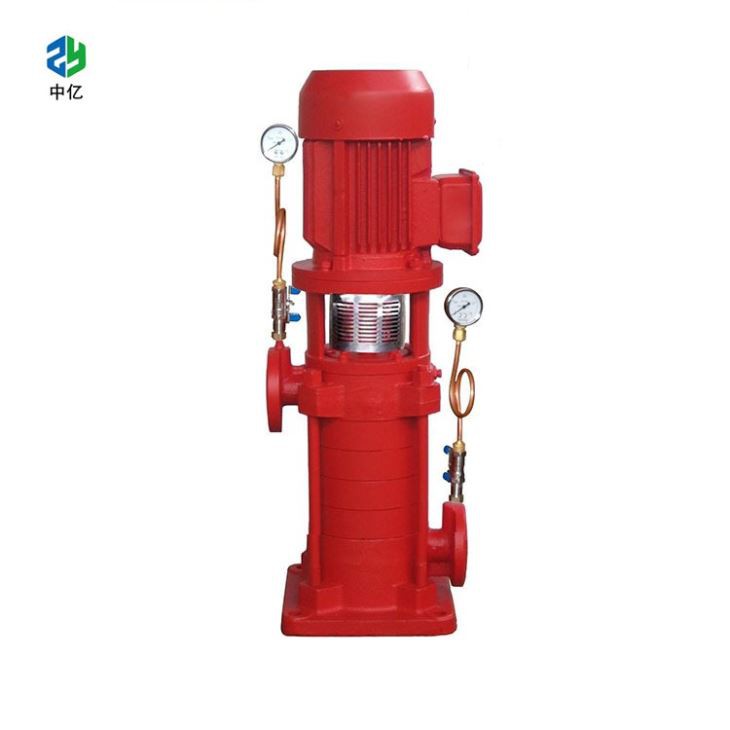
- Pump Housing: For the pump housing, materials such as stainless steel or cast iron with a corrosion - resistant coating are commonly used. Stainless steel offers excellent corrosion resistance due to the presence of chromium, which forms a passive oxide layer on the surface. This layer protects the metal from further oxidation. Cast iron can also be a suitable option if it is coated with epoxy or polyurethane. These coatings act as a barrier between the metal and the corrosive environment.
- Impellers: Impellers are critical components of multistage fire pumps. They are usually made of materials like bronze or stainless steel. Bronze has good corrosion resistance and is also resistant to cavitation, which is the formation and collapse of vapor bubbles in the liquid. Stainless steel impellers are also popular, especially in applications where the water quality is poor or the environment is highly corrosive.
Coatings and Linings
Applying protective coatings and linings is an effective way to prevent corrosion in multistage fire pumps.
- Epoxy Coatings: Epoxy coatings are widely used in the fire pump industry. They form a hard, durable barrier that resists chemicals, abrasion, and moisture. Epoxy coatings can be applied to the internal and external surfaces of the pump housing, as well as other components. They are available in different formulations, such as solvent - based and water - based, to suit different application requirements.
- Polyurethane Linings: Polyurethane linings are another option for protecting pump components. They offer excellent flexibility and impact resistance, in addition to corrosion protection. Polyurethane linings are often used in areas where the pump is exposed to mechanical stress, such as the impeller and volute.
Proper Water Treatment
Since water is a major factor in pump corrosion, proper water treatment is essential.
- Filtration: Installing a filtration system can remove suspended solids from the water. These solids can cause abrasion on pump surfaces and also act as sites for corrosion initiation. Filters can be designed to remove specific sizes of particles, depending on the quality of the source water.
- pH Adjustment: Maintaining the proper pH of the water is crucial. Water that is too acidic or too alkaline can accelerate corrosion. The ideal pH range for fire protection water is typically between 6.5 and 8.5. pH adjustment can be achieved by adding chemicals such as acids or alkalis to the water.
- Oxygen Removal: Dissolved oxygen in water can cause oxidation of metals. Techniques such as degasification or the use of oxygen - scavenging chemicals can be employed to reduce the oxygen content in the water.
Maintenance and Inspection
Regular maintenance and inspection are vital for the early detection and prevention of corrosion in multistage fire pumps.
- Visual Inspections: Conduct visual inspections of the pump at regular intervals. Look for signs of rust, pitting, or discoloration on the pump surfaces. Check for leaks, as leaked water can also lead to corrosion in the surrounding areas.
- Component Replacement: If any components show signs of significant corrosion, they should be replaced immediately. This includes gaskets, seals, and even entire pump parts if necessary. Regularly replacing worn - out components can prevent the spread of corrosion to other parts of the pump.
- Lubrication: Proper lubrication of moving parts is essential to prevent friction and wear, which can lead to corrosion. Use high - quality lubricants that are resistant to water and chemicals.
Special Considerations for Different Pump Types
When it comes to protecting multistage fire pumps from corrosion, there are also some special considerations for different pump types, such as the Vertical Multistage Stage Fire Pump and Horizontal Multistage Stage Fire Pump.
For vertical multistage fire pumps, the installation height and the way they are mounted can affect corrosion. Ensure that the pump is installed at a proper height to avoid water pooling around the base, which can lead to corrosion of the pump feet and the lower part of the housing. Additionally, because vertical pumps are often installed in wells or pits, proper ventilation is necessary to prevent the accumulation of moisture and corrosive vapors.
Horizontal multistage fire pumps may be more exposed to environmental elements if installed outdoors. Make sure to protect the pump with a suitable enclosure to shield it from rain, snow, and direct sunlight. The enclosure can also help in reducing the impact of dust and pollutants on the pump.
The Vertical Multi Stage Fire Pump often operates in a challenging environment, especially if it is equipped with an explosion - proof motor. The motor should be protected from moisture and chemical ingress to prevent corrosion of its internal components. Use appropriate seals and gaskets to ensure the integrity of the motor enclosure.
Conclusion
Protecting a multistage fire pump from corrosion is a comprehensive process that involves material selection, coatings, water treatment, and regular maintenance. By implementing these strategies, you can significantly extend the lifespan of the pump and ensure its reliable performance in fire protection systems.
If you are in the market for high - quality multistage fire pumps or need more information on corrosion protection, I encourage you to reach out. Our team of experts is ready to assist you in selecting the right pump for your needs and providing guidance on how to keep it in optimal condition. We look forward to the opportunity to work with you on your fire protection projects.
References
- Davis, J. R. (Ed.). (2001). Handbook of corrosion data. ASM International.
- Fontana, M. G. (1986). Corrosion engineering (3rd ed.). McGraw - Hill.
- Revie, R. W. (Ed.). (2011). Uhlig's corrosion handbook. Wiley.