

Hey there! As a supplier of multistage centrifugal pumps, I've seen firsthand how crucial the impeller design is to the overall performance of these pumps. In this blog, I'm gonna share some tips on how to optimize the impeller design of a multistage centrifugal pump.
First things first, let's understand why the impeller is so important. The impeller is like the heart of a centrifugal pump. It rotates at high speed, creating a centrifugal force that sucks in fluid and then pushes it out at a higher pressure. A well - designed impeller can improve the pump's efficiency, reduce energy consumption, and extend its service life.
1. Understanding the Basics of Impeller Design
The impeller design mainly involves parameters such as the number of blades, blade shape, and blade angle. The number of blades affects the flow rate and pressure head characteristics of the pump. Generally speaking, more blades can increase the pressure head but may also reduce the flow rate. For a multistage centrifugal pump, finding the right balance in the number of blades for each stage is key.
The blade shape can be either forward - curved, backward - curved, or radial. Backward - curved blades are the most commonly used in multistage centrifugal pumps because they offer a good balance between efficiency and stability. Forward - curved blades can generate high flow rates but are often less efficient and can cause more vibrations. Radial blades are typically used in applications where high pressure is required at relatively low flow rates.

The blade angle also plays a significant role. The inlet and outlet blade angles need to be carefully designed to match the fluid's entry and exit velocities. Incorrect blade angles can lead to flow separation, increased hydraulic losses, and reduced pump efficiency.
2. Research and Analysis
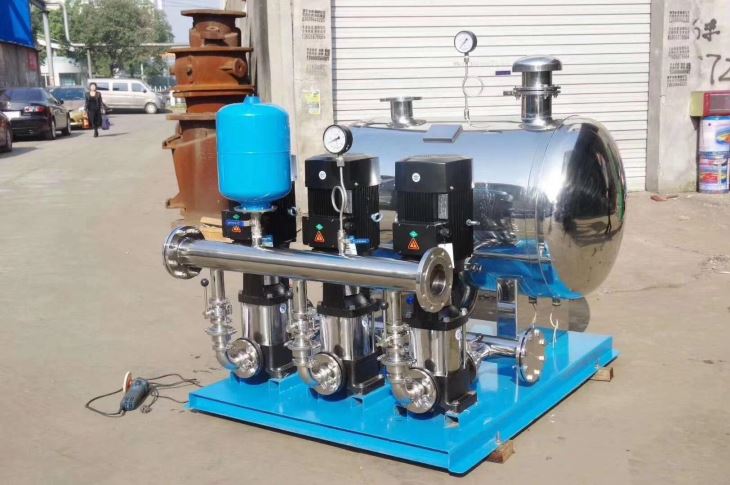
Before starting the design process, it's essential to conduct thorough research and analysis. Look at the specific requirements of the application. For example, if you're supplying a Stainless Steel Manifold Water Booster pump Set for a water supply system, you need to know the required flow rate, pressure head, and the type of fluid (e.g., clean water, water with some particles).
You can use computational fluid dynamics (CFD) software to simulate the flow inside the impeller. CFD analysis can provide detailed information about the flow patterns, pressure distribution, and velocity profiles. This helps you identify potential areas of improvement in the impeller design. For instance, if the analysis shows high - pressure losses at a particular point on the blade surface, you can modify the blade shape or angle to reduce these losses.
3. Material Selection for the Impeller
The choice of material for the impeller is another important aspect of optimization. The material should be able to withstand the mechanical stresses due to rotation, corrosion from the fluid, and erosion if the fluid contains particles.
For pumps used in water applications, stainless steel is a popular choice due to its corrosion - resistance properties. It can also handle high - speed rotation without significant wear. For applications where the fluid is more abrasive, materials like bronze or special alloys may be more suitable.
In addition to the material's properties, its manufacturing process also matters. The impeller should be manufactured with high precision to ensure a smooth surface and accurate blade geometry. Any irregularities on the blade surface can disrupt the fluid flow and reduce the pump's efficiency.
4. Testing and Validation
Once you've designed the impeller, it's time for testing and validation. Build a prototype of the impeller and install it in a test pump. Conduct performance tests under different operating conditions to measure the pump's flow rate, pressure head, efficiency, and power consumption.
Compare the test results with the design specifications. If there are significant differences, go back to the drawing board and make adjustments to the impeller design. Maybe you need to change the blade angle slightly or modify the blade shape to improve the performance.
Repeating the testing process is crucial. Each round of testing provides valuable feedback that can lead to further optimization of the impeller design.
5. Incorporating Advanced Design Features
To stay ahead in the market, it's a good idea to incorporate advanced design features into the impeller. For example, some modern impellers use a variable - pitch blade design. This allows the blade angle to change along the blade length, which can optimize the flow at different radial positions and improve the overall efficiency of the pump.
Another feature is the addition of splitter blades. Splitter blades are shorter blades placed between the main blades. They can improve the flow distribution and reduce the likelihood of flow separation, especially at high flow rates.
6. Considerations for Multistage Configuration
In a multistage centrifugal pump, each impeller stage has a specific function. The first stage is usually designed to handle the suction of the fluid, so it needs to be optimized for low - pressure, high - flow conditions. The subsequent stages are focused on increasing the pressure head.
The impeller design for each stage should be coordinated to ensure smooth flow transition between stages. This may involve adjusting the blade geometry, blade number, or rotational speed of each impeller to match the overall performance requirements of the pump.
For example, if you're dealing with a Vertical Multistage Centrifugal Pump, the impeller design needs to take into account the vertical orientation and the potential for cavitation at the suction stage.
7. Cost - Benefit Analysis
While optimizing the impeller design, it's important to conduct a cost - benefit analysis. Some advanced design features or materials may significantly increase the manufacturing cost of the impeller. You need to weigh the benefits of improved performance against the additional cost.
For example, using a high - end alloy for the impeller may improve its corrosion resistance and durability, but it also comes with a higher price tag. If the application doesn't require such extreme durability, a more cost - effective material may be a better choice.
Conclusion
Optimizing the impeller design of a multistage centrifugal pump is a complex but rewarding process. By understanding the basic principles, conducting thorough research, choosing the right materials, and performing rigorous testing, you can create an impeller that offers high efficiency, reliability, and performance.
Whether you're looking for a Stainless Steel Manifold Water Booster pump Set, a Vertical Multistage Centrifugal Pump, or a Constant Water Pump, proper impeller design is the key to getting the best out of your pump.
If you're interested in our multistage centrifugal pumps or want to discuss impeller design optimization for your specific application, we're here to help. Contact us for a detailed consultation and let's work together to find the perfect pump solution for you.
References
- Stepanoff, A. J. (1957). Centrifugal and Axial Flow Pumps. John Wiley & Sons.
- Gülich, J. F. (2010). Centrifugal Pumps. Springer.
- Shin, J. S., & Kim, C. H. (2008). Optimization of a Centrifugal Pump Impeller using Response Surface Method. Journal of Mechanical Science and Technology, 22(2), 283 - 290.