

Altitude plays a crucial role in the performance and operation of booster pump sets. As a supplier of booster pump sets, I've witnessed firsthand how varying altitudes can significantly affect these systems. In this blog, we'll delve into the scientific aspects of how altitude impacts booster pump sets and what considerations are necessary for optimal performance at different elevations.
Atmospheric Pressure and Its Influence
Atmospheric pressure decreases as altitude increases. At sea - level, the standard atmospheric pressure is approximately 101.3 kPa (14.7 psi). However, as we ascend to higher altitudes, this pressure drops. For instance, at an altitude of 1500 meters, the atmospheric pressure is around 84 kPa, and at 3000 meters, it can be as low as 70 kPa.
This decrease in atmospheric pressure has a direct impact on the suction capacity of booster pump sets. Most booster pumps rely on atmospheric pressure to push water into the pump inlet. With lower atmospheric pressure at higher altitudes, the net positive suction head available (NPSHa) is reduced. NPSHa is the amount of pressure available at the pump inlet to prevent cavitation. Cavitation occurs when the pressure at the pump inlet drops below the vapor pressure of the liquid, causing the formation of vapor bubbles. These bubbles then collapse when they reach higher - pressure areas within the pump, leading to damage to the impeller and other pump components, reduced efficiency, and increased noise.
Pump Performance Curves at Different Altitudes
Pump performance curves are graphical representations of a pump's performance characteristics, such as flow rate, head, and power consumption. These curves are typically developed and tested at sea - level conditions. When operating at higher altitudes, the performance of the pump can deviate from these standard curves.
The head - flow rate relationship of a pump is affected by the reduced NPSHa. As the altitude increases, the pump may not be able to generate the same head as it would at sea - level for a given flow rate. This means that if a booster pump set is designed to deliver a certain amount of water to a specific height at sea - level, it may struggle to achieve the same performance at higher altitudes.
Power consumption is also influenced by altitude. Due to the reduced efficiency caused by cavitation and the need to work harder to overcome the lower atmospheric pressure, the pump may require more power to maintain the desired flow rate and head. This can lead to increased operating costs and potentially overloading of the motor if not properly accounted for.
Impact on Pump Materials and Seals
The lower oxygen levels and different environmental conditions at higher altitudes can also affect the materials used in booster pump sets. Some materials may be more prone to corrosion or degradation in these conditions. For example, certain metals may oxidize more quickly due to the thinner atmosphere and potentially different humidity levels.
Seals in the pump are also critical components. At higher altitudes, the reduced atmospheric pressure can cause seals to experience different stress levels. This may lead to premature wear and leakage, which can further compromise the performance of the pump set.
Solutions for High - Altitude Applications
When supplying booster pump sets for high - altitude applications, several solutions can be implemented to ensure optimal performance.
Pump Selection
It is essential to select a pump with a higher NPSH requirement (NPSHr) margin. This means choosing a pump that can operate with a lower NPSHa without experiencing cavitation. Additionally, pumps with larger impellers and more robust designs may be better suited for high - altitude use as they can handle the reduced atmospheric pressure more effectively.
System Design
The overall system design should be adjusted for high - altitude conditions. This may include increasing the diameter of the suction pipe to reduce friction losses and improve the NPSHa. Installing a suction - side pressure booster or a pre - pump can also help increase the NPSHa at the pump inlet.
Material Selection
Using corrosion - resistant materials for pump components can mitigate the effects of the high - altitude environment. For seals, materials that can withstand the different stress levels and environmental conditions should be chosen.
Our Product Range for High - Altitude Applications
As a booster pump set supplier, we offer a wide range of products suitable for high - altitude applications. Our Constant Water Pump is designed with advanced technology to handle the challenges of reduced NPSHa. It has a high - efficiency impeller and a robust casing that can withstand the stress of high - altitude operation.
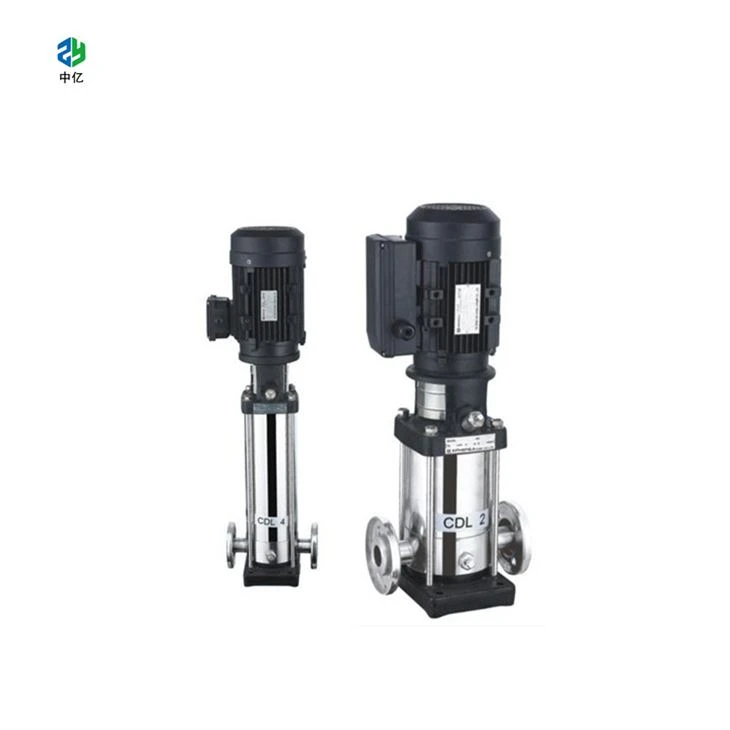
Our Vertical Multistage Centrifugal Pump is another excellent option for high - altitude installations. Its vertical design allows for easy installation in limited spaces, and it is engineered to provide stable performance even at reduced atmospheric pressures.
The Horizontal Centrifugal Multistage Pump in our product line is known for its reliability and high - efficiency operation. It can be customized to meet the specific requirements of high - altitude projects, ensuring that it can deliver the necessary flow rate and head.
Conclusion
Altitude has a significant effect on the performance and operation of booster pump sets. The decrease in atmospheric pressure at higher altitudes reduces the NPSHa, affects pump performance curves, and can cause issues with pump materials and seals. However, with proper pump selection, system design, and material choices, these challenges can be overcome.
If you are planning a project at a high - altitude location and need a reliable booster pump set, we are here to help. Our team of experts can assist you in selecting the right pump for your specific needs and ensuring that it is properly installed and maintained. Contact us today to start the procurement process and discuss how our products can meet your high - altitude pumping requirements.

References
- Karassik, I. J., Messina, J. P., Cooper, P. T., & Heald, C. C. (2008). Pump Handbook. McGraw - Hill.
- Stepanoff, A. J. (1957). Centrifugal and Axial Flow Pumps: Theory, Design, and Application. John Wiley & Sons.