

Hey there! As a supplier of Multistage Centrifugal Pumps, I often get asked about how to adjust the impeller clearance in these pumps. It's a crucial aspect of pump maintenance and performance optimization, so I'm gonna break it down for you in this blog.
First off, let's understand why adjusting the impeller clearance is so important. In a multistage centrifugal pump, the impellers play a key role in increasing the fluid's pressure as it moves through the pump. The clearance between the impeller and the pump casing affects the efficiency and performance of the pump. If the clearance is too large, there'll be a lot of leakage, which reduces the pump's efficiency. On the other hand, if the clearance is too small, the impeller might rub against the casing, causing damage and reducing the pump's lifespan.
Now, let's get into the steps of adjusting the impeller clearance.
Step 1: Preparation
Before you start adjusting the impeller clearance, you need to make sure you've got all the necessary tools. You'll typically need a set of wrenches, a feeler gauge, and a dial indicator. Also, make sure the pump is shut down and isolated from the power source. Safety first, right?
Step 2: Disassembling the Pump
The next step is to disassemble the pump to access the impellers. This usually involves removing the pump casing, the suction and discharge covers, and any other components that are in the way. Be careful when you're taking things apart and keep track of all the parts. You don't want to lose anything!
Step 3: Measuring the Current Clearance
Once you've accessed the impellers, use a feeler gauge to measure the current clearance between the impeller and the casing. This will give you a baseline to work from. Take measurements at several points around the impeller to get an accurate average.
Step 4: Adjusting the Clearance
Now comes the actual adjustment part. There are a few different ways to adjust the impeller clearance, depending on the design of the pump.
One common method is to use shims. Shims are thin pieces of metal that can be added or removed to change the position of the impeller. If the clearance is too large, you can add shims to move the impeller closer to the casing. If the clearance is too small, you can remove shims to increase the clearance.
Another method is to adjust the position of the impeller shaft. Some pumps have adjustable bearings or couplings that allow you to move the shaft axially. By moving the shaft, you can change the position of the impeller and adjust the clearance.
When you're making the adjustment, use a dial indicator to monitor the movement of the impeller. This will help you make precise adjustments and ensure that the clearance is uniform around the impeller.

Step 5: Reassembling the Pump
Once you've adjusted the impeller clearance to the desired value, it's time to reassemble the pump. Put all the components back in place, making sure they're properly aligned and tightened. Double-check all the connections to ensure there are no leaks.
Step 6: Testing the Pump
After reassembling the pump, it's important to test it to make sure everything is working properly. Start the pump and check the performance. Look for any signs of abnormal vibration, noise, or leakage. Also, monitor the pressure and flow rate to make sure they're within the expected range.
If you notice any problems during the test, you may need to go back and make further adjustments to the impeller clearance.
Now, let me tell you a bit about the different types of multistage centrifugal pumps we offer. We have a great selection of Booster Pump Set that are perfect for applications where you need to increase the pressure of the fluid. These pumps are designed to be highly efficient and reliable, and they come in a variety of sizes and configurations to meet your specific needs.
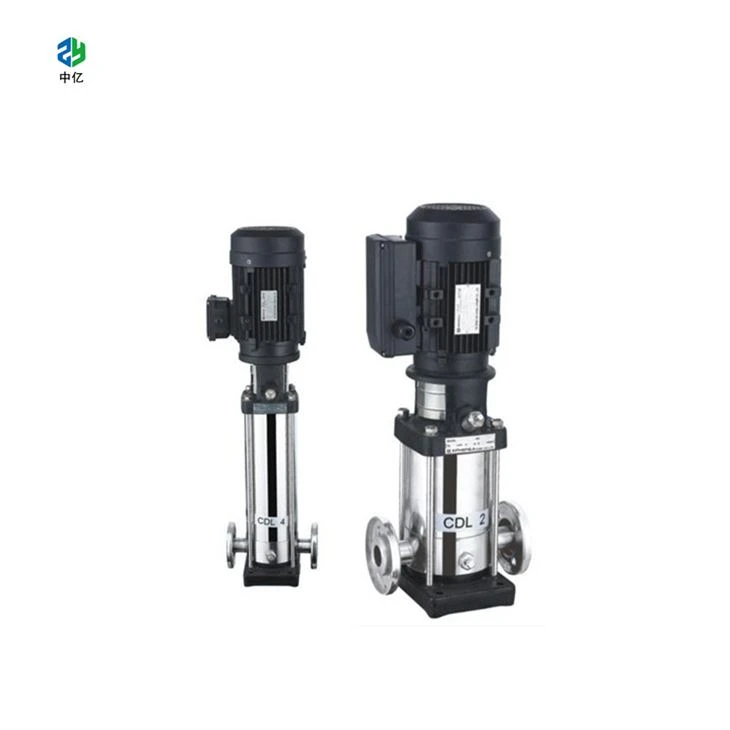
We also have Vertical Multistage Centrifugal Pump that are ideal for installations where space is limited. These pumps are compact and easy to install, and they offer excellent performance in a wide range of applications.
And if you're looking for a pump that can maintain a constant water pressure, our Constant Water Pump is a great choice. These pumps are equipped with advanced control systems that automatically adjust the pump speed to maintain a steady pressure, even when the flow rate changes.
If you're in the market for a multistage centrifugal pump or need help with adjusting the impeller clearance, don't hesitate to get in touch. We've got a team of experts who can provide you with the advice and support you need. Whether you're a small business or a large industrial operation, we can help you find the right pump for your application.
In conclusion, adjusting the impeller clearance in a multistage centrifugal pump is an important maintenance task that can significantly improve the pump's performance and efficiency. By following the steps outlined in this blog, you can ensure that your pump is operating at its best. And if you need any assistance or have any questions, feel free to reach out. We're here to help!
References
- "Centrifugal Pump Handbook" by Igor J. Karassik
- "Pump User's Handbook: Life Extension" by Allan R. Budris