

A single centrifugal pump is a vital piece of equipment in various industries, including chemical processing, water treatment, and power generation. As a supplier of single centrifugal pumps, I've witnessed firsthand the profound influence of impeller design on a pump's performance. Understanding this relationship is crucial for ensuring that the pumps we supply meet the diverse needs of our customers.
Basic Function of a Single Centrifugal Pump
Before delving into the details of impeller design, it's essential to understand the basic working principle of a single centrifugal pump. The pump operates by using a rotating impeller to convert mechanical energy from a motor into kinetic energy of the fluid. When the impeller spins, it creates a low - pressure area at the center, causing the fluid to be drawn into the pump. As the fluid moves along the impeller blades, it gains both speed and pressure before being discharged through the outlet.
Key Elements of Impeller Design
The impeller is the heart of a single centrifugal pump, and several design elements play a significant role in determining the pump's performance.
Blade Shape
The shape of the impeller blades has a direct impact on the flow pattern and efficiency of the pump. There are three main types of blade shapes: backward - curved, radial, and forward - curved.
Backward - curved blades are the most common in single centrifugal pumps. They offer high efficiency and a relatively stable head - flow characteristic. The backward curvature of the blades helps to reduce the formation of eddies and recirculation within the pump, which in turn minimizes energy losses. This design is well - suited for applications where a constant flow rate and high efficiency are required, such as in water supply systems.

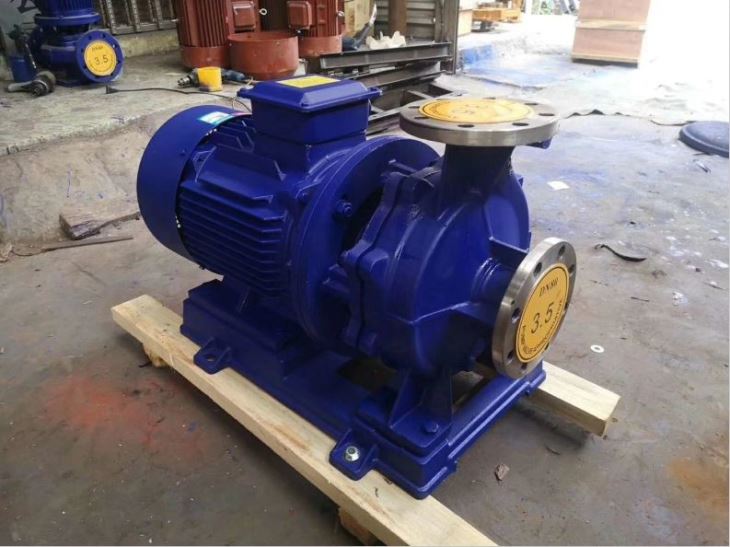
Radial blades are straight and extend radially from the center of the impeller. They generate a relatively high head at low flow rates. However, they are less efficient compared to backward - curved blades, especially at higher flow rates. Radial blade impellers are often used in applications such as small - scale industrial processes where high pressure is needed.
Forward - curved blades are designed to generate a high flow rate at a relatively low head. These blades have a tendency to produce a non - stable head - flow characteristic, which can lead to problems such as surging and cavitation. As such, forward - curved blade impellers are less commonly used in single centrifugal pumps, except in some specific applications where high flow is the primary requirement.
Blade Number
The number of blades on an impeller also affects the pump's performance. A larger number of blades generally results in a smoother flow and a higher head. However, it can also increase the frictional losses within the pump, which may reduce the overall efficiency. On the other hand, a smaller number of blades may lead to a more uneven flow and a lower head, but it can also reduce the frictional losses. The optimal number of blades depends on various factors, including the pump's design flow rate, head requirements, and the properties of the fluid being pumped.
Impeller Diameter
The diameter of the impeller is another critical design parameter. A larger impeller diameter generally results in a higher head and a higher flow rate. This is because a larger impeller can impart more kinetic energy to the fluid. However, increasing the impeller diameter also increases the power consumption of the pump. Therefore, the impeller diameter needs to be carefully selected based on the specific requirements of the application.
Impact on Pump Performance
Efficiency
The efficiency of a single centrifugal pump is a measure of how effectively it converts the input power into useful hydraulic power. Impeller design has a significant impact on efficiency. As mentioned earlier, backward - curved blade impellers are generally more efficient than radial or forward - curved blade impellers due to the reduced formation of eddies and recirculation. Additionally, the optimal selection of blade number and impeller diameter can also minimize frictional losses and improve the overall efficiency of the pump.
Head and Flow Rate
The head - flow rate characteristic of a single centrifugal pump is determined by the impeller design. Different blade shapes and impeller diameters can result in different head - flow rate curves. For example, a pump with a larger impeller diameter or radial blades will generally have a higher head at a given flow rate compared to a pump with a smaller impeller diameter or backward - curved blades. Understanding the specific head and flow rate requirements of an application is crucial for selecting the appropriate impeller design.
Cavitation
Cavitation is a phenomenon that occurs when the pressure of the fluid in the pump drops below its vapor pressure, causing the formation of vapor bubbles. These bubbles can collapse suddenly, generating high - energy shock waves that can damage the impeller and the pump casing. The impeller design can influence the occurrence of cavitation. For example, a well - designed impeller with smooth blade surfaces and an appropriate inlet geometry can help to reduce the pressure drop at the inlet and minimize the risk of cavitation.
Applications and Suitable Impeller Designs
Different industries and applications have specific requirements for single centrifugal pumps, and the impeller design needs to be tailored accordingly.
Water Supply and Distribution
In water supply and distribution systems, high efficiency and a stable flow rate are essential. Backward - curved blade impellers with an appropriate number of blades and impeller diameter are commonly used. Our Piping Centrifugal Pump, which features a well - designed impeller, is suitable for such applications, providing reliable and efficient water transfer.
Chemical Processing
Chemical processing often involves the pumping of corrosive and abrasive fluids. In these applications, materials and impeller design need to be carefully selected to ensure the pump's durability and performance. Our IHF Chemicals Centrifugal Pump is designed with impellers made of corrosion - resistant materials and optimized blade shapes to handle a wide range of chemical fluids.
Industrial Processes
In various industrial processes, different head and flow rate requirements exist. For applications that require high pressure, radial blade impellers may be used. Our Single horizontal centrifugal pump can be configured with different impeller designs to meet the specific needs of industrial customers, providing flexibility and reliability.
Conclusion
In conclusion, the impeller design has a profound impact on the performance of a single centrifugal pump. From efficiency and head - flow rate characteristics to cavitation resistance, every aspect of the pump's performance is influenced by the impeller's design elements, including blade shape, blade number, and impeller diameter. As a single centrifugal pump supplier, we are committed to providing pumps with optimized impeller designs to meet the diverse needs of our customers. Whether you need a pump for water supply, chemical processing, or industrial applications, we have the expertise and the product range to offer the most suitable solutions.
If you are interested in our single centrifugal pumps and would like to discuss your specific requirements, please feel free to contact us for a detailed consultation and quotation. We look forward to working with you to ensure the success of your projects.
References
- Hall, I. M. (1986). Centrifugal pump design. Butterworth - Heinemann.
- Stepanoff, A. J. (1957). Centrifugal and axial flow pumps: theory, design, and application. Wiley.
- Gulich, J. F. (2010). Centrifugal Pumps (2nd ed.). Springer.